
See the big picture before the exceptions
Use the map to separate the central topic, major branches, and supporting ideas, then return to the PDF when precision or evidence matters.
A useful mind map does more than place keywords around a central bubble. Import a focused PDF into BrainDen, review the structured note, and use the mind map to inspect hierarchy and relationships while the original pages remain available for evidence, notation, and exceptions.
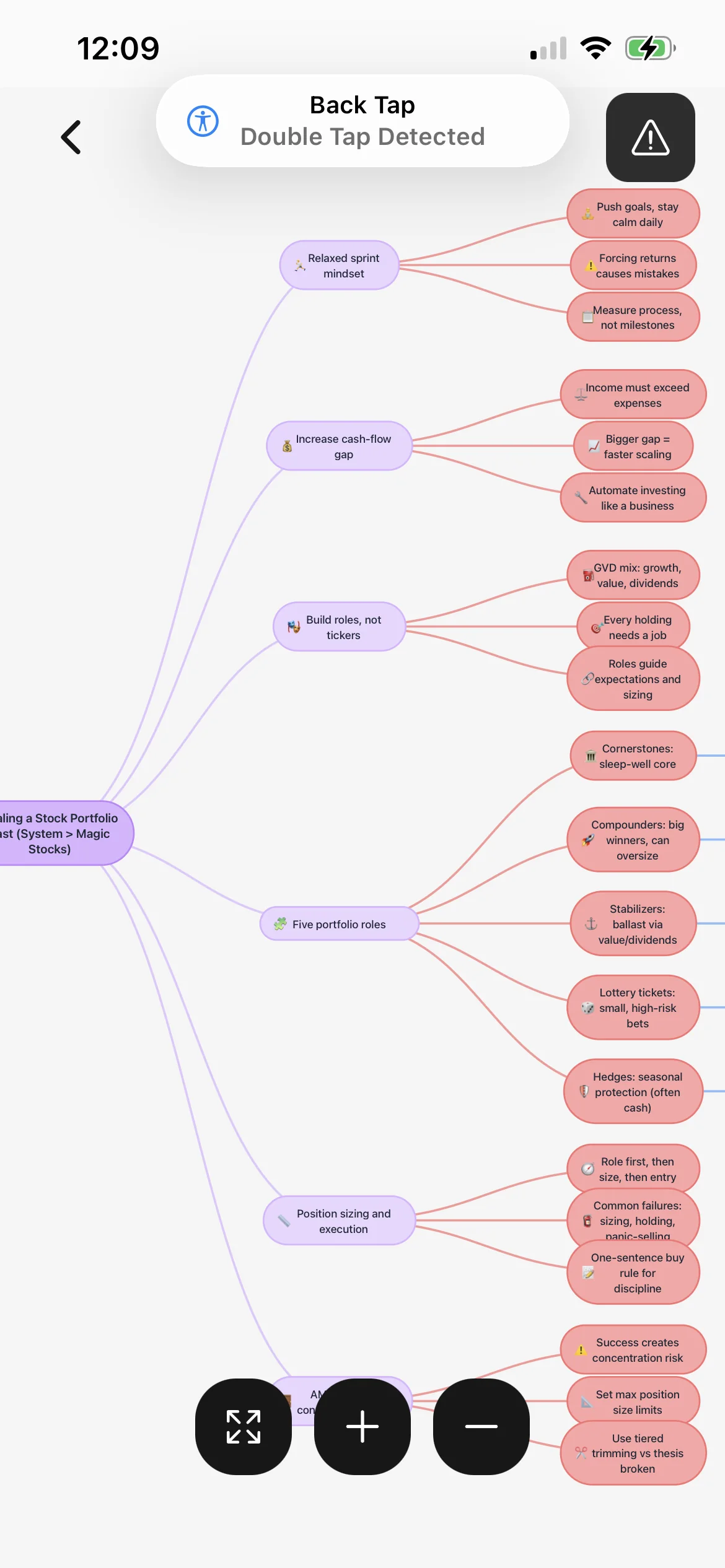
Use the map to separate the central topic, major branches, and supporting ideas, then return to the PDF when precision or evidence matters.
A useful branch should express hierarchy, sequence, cause, contrast, or another explainable connection rather than merely repeat a nearby keyword.
Link the underlying note to related lectures or readings and select several notes for continuous review when one document cannot explain the whole topic.
Workflow fit
From source to active study
Start with a chapter, article, or lecture deck built around one coherent topic. A huge multi-topic file can produce a crowded map with weak relationships.
Verify headings, definitions, notation, and the role of diagrams or tables. Correct the note before using its concepts as the map's building blocks.
Open the mind map, choose a branch, and state how its ideas connect before reading the detailed note. Revisit the source for anything you cannot justify.
A concrete example
A 24-page PDF reviewing habitat fragmentation, edge effects, genetic isolation, species movement, and competing conservation responses.
A useful result could include
Generated material is a study aid. Review important terminology, notation, and claims against your source.
Make the result better
BrainDen removes repetitive setup work. Your judgement, course context, and retrieval practice are what turn the result into learning.
Try phrases such as causes, depends on, contrasts with, or is an example of. If no relationship fits, the branch may be misplaced or unsupported.
Maps simplify. Preserve definitions, quotations, formulas, evidence quality, and exceptions in the structured note and attached PDF rather than crowding every node.
After reviewing, close the map and sketch the major branches from memory. Check the result to discover missing links instead of passively admiring the finished diagram.
Questions and answers
Yes. Import the PDF, review the structured note, and open the connected mind map view to inspect the main concepts and their relationships.
No. The map simplifies structure for review, while the original PDF and detailed note remain available for evidence, diagrams, notation, and context.
Use one coherent chapter or section at a time. Smaller maps make relationships easier to explain, check, and connect to other course notes.
Create and check each note separately, link related notes, then select the focused set you need for continuous multi-note review.
Continue in your connected library
Folders tell you where a note belongs. Links show how its ideas relate to the rest of what you know. Connect a concept to another lecture, reading, or course and use backlinks to find the relationship from either side.
Explore this featureReview the whole topicExam topics rarely fit inside one note. Select the lectures, readings, and explanations that belong together, then review them in one continuous view without replacing or rewriting the originals.
Explore this featureKeep building your study system
Start with a focused PDF chapter or reading, create a connected note, and choose the study tools that help you understand and remember it.